Uncategorized

National Poetry Month

\”In the rhythm of the needles,            there is music for the soul.\”            — from an old sampler
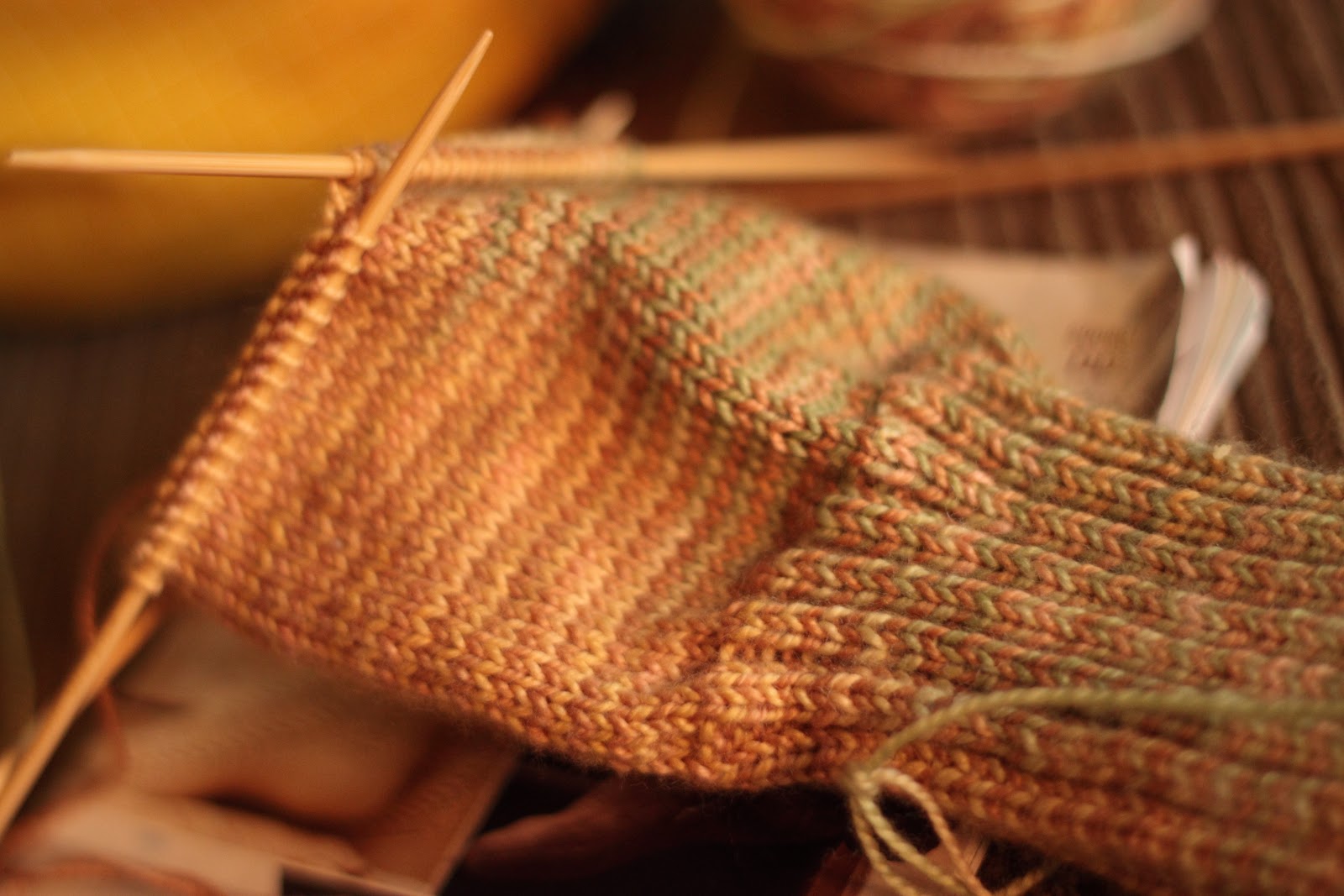
In honor of National Poetry month, and since knitting is a musical, poetic activity (and since I personally enjoy writing poetry) here are a few poems celebrating knitting:
ODE TO MY SOCKS

(Translated by Robert Bly)

Mara Mori brought me
a pair of socks
which she knitted herself
with her sheepherder\’s hands,
two socks as soft as rabbits.
I slipped my feet into them
as though into two cases
knitted with threads of twilight and goatskin.

Violent socks,
my feet were two fish made of wool,
two long sharks
sea blue, shot through
by one golden thread,
two immense blackbirds,
two cannons,
my feet were honored in this way
by these heavenly socks.

They were so handsome for the first time
my feet seemed to me unacceptable
like two decrepit firemen,
firemen unworthy of that woven fire,
of those glowing socks.
 
Nevertheless, I resisted the sharp tempation
to save them somewhere as schoolboys
keep fireflies,
as learned men collect
sacred texts,
I resisted the mad impulse to put them
in a golden cage and each day give them
birdseed and pieces of pink melon.

Like explorers in the jungle
who hand over the very rare green deer
to the spit and eat it with remorse,
I stretched out my feet and pulled on
the magnificent socks and then my shoes.
 
The moral of my ode is this:
beauty is twice beauty,
and what is good is doubly good
when it is a matter of two socks
made of wool in winter.
Winding Wool

by Robert Service
 
She\’d bring to me a skein of wool
And beg me to hold out my hands;
so on my pipe I cease to pull
And watch her twine the shining strands
Into a ball so snug and neat,
Perchance a pair of socks to knit
To comfort my unworthy feet,
Or pullover my girth to fit.

As to the winding I would sway,
A poem in my head would sing,
And I would watch in dreamy way
The bright yarn swiftly slendering.
The best I liked were coloured strands
I let my pensive pipe grow cool . . .
Two active and two passive hands,
So busy winding shining wool.

Alas! Two of those hands are cold,
And in these days of wrath and wrong,
I am so wearyful and old,
I wonder if I\’ve lived too long.
So in my loneliness I sit
And dream of sweet domestic rule . . .
When gentle women used to knit,

And men were happy winding wool.


Happy Poetry Month and cozy knitting, everyone!
Uncategorized

Lions and Memories

Where I come from, there is a sort of divide. There are those seemingly more sophisticated folks who live in a more complex, greener, loftier lifestyle in downtownier Portland, Oregon, and then there are those of us who live around the edges of the living, breathing city—in the suburbs. Oh, we live and breath, too, we just do it in a different manner.
Portland is at least a few, if not several miles from any of the smaller towns, easily travelled to by way of a series of winding, smaller suburban side roads to greater, wider thoroughfares, all leading to and past the city. Everyone from the northerly or easterly side of Portland must also traverse a bridge or two, lending further to a feeling of intricacy in the journey.
Coming into downtown feels almost like entering another culture. The shops are different. In leaving the suburbs, the big box stores like Michael’s or Home Depot drift away behind you, as do so many easily accessed McDonald’s and Starbucks. Instead of widely spaced business with big parking lots, you increasingly encounter more tightly compacted businesses with difficult parking conditions for people with minivans and SUVs.
There are restaurants lining the narrower streets that have singular names like “Zed’s Ethiopian Cuisine” or “Abu Careem”—you get a sense that without an insider’s knowledge, you would definitely be taking a risk in eating at any of them. You suddenly wish you knew someone who was in the know.

The tension seems to be rising—is it your surroundings, or is it you? It’s excitement and nerves all at once: an alien going into a native people’s territory.

These have been my feelings since childhood, and I was experiencing them again a few months ago when my daughter, Jo, and I headed into Portland on a drizzly day. Jo, who has been living in Seattle’s Capitol Hill area for three years, felt completely at home where we were going.

These had become her people, her culture. She had become a grown young woman with a small, urban apartment who was growing her own herbs on her quaint sunny windowsill to make glycerin hand soaps and lotions. I was still living in a sprawling neighborhood with a house and a yard and just trying to remember to put the trash out each week on time.

We crossed the I-5 bridge from Vancouver into Oregon, with it’s towering, green arches where birds like to sit. The city of Portland decided recently to protect the mint-colored paint from their poop by sounding off a loud noise every minute or so.
The noise was like a simulated shot from a gun and was intended to cause perched birds to light and approaching ones to change directions. As a driver going the speed limit, you would be over the bridge in time to have only heard it about one time or so. Today there was slow traffic and the nerve-jangling sound went off about 5 times, making me jump with each “shot.” Jo laughed at me as I tried to joke at each one—each time less effectively.
Amy Rose was with us today, too. She was already late for her nap and the traffic was delaying it further, but I was willing to risk it to get to a new yarn shop. I was beginning to worry how she would behave as the minutes were passing—she had not been so good in other yarn shops.
Amy Rose had lots of energy and loved to expend it in new places in the view of strangers. She loved yarn shops, too, and would walk in, instantly mesmerized by the amazing circles and lines of colors coming from the tall, tall shelves. She loved to sprint for them and, once she reached her destination, begin rapidly tearing hank after hank of yarn from their homes in the walls, feeling the new textures and warmth on her smooth, tender little fingers.
I had learned to deal with this. It had become an Olympic event—chasing Amy. Today I was wearing sneakers and sweats. I could cut and run quickly when I needed to, dive if I must, to save the fibers from certain slobbery doom. I had my smaller jog stroller with me, too, and I planned to start with Amy in that.
Leaving the flapping wings and gunshot sounds of the bridge, we were on the home stretch. Shopping malls gave way to quaint Portland streets with hip, brightly decorated tiny shops, squeezed in like colorful little facets of a fan as though they could open up at any moment, breaking their illusion and becoming large and wide. Such is the imagining of one not used to the close quarters.  No, they stayed as they were, wind socks flying, artful paintings on the glass storefronts.
I was driving my Expedition—a big green SUV, of course, to carry my non-zero-population family of 8. As I drove down the narrowing streets, I felt like an adult in a preschool who was trying to navigate a little classroom with tiny chairs and toddlers with size 12 shoes.

Around me were Smart cars and bicycles, cars parked in front of every store, leaving only 2 lanes on the road where there might have been four. I had to stay dangerously close the center line to avoid car doors and increasingly larger numbers of pedestrians with my green giant. People on bicycles were staring at me—was it my vehicle or my granny driving?

I was relieved when we reached our destination. We parked about 8 blocks away (I was hoping that at that distance, no one who saw me get out of my truck would recognize me in the store) and made our way back—in the Oregon rain, of course—to the lovely yarn shop.

The glass storefront had three windows and was wider than many of the other stores around it. On the right were displays of knitted and crocheted things, matching yarn and patterns for sale. On the left, it looked like there was a sitting area. We opened the door, the bell sounding as if to signal the entrance of the two women with big purses and a stroller—one in cute, young, “grungy” clothes, one in Kohl’s athletic originals.

The store was lovely. It was deep, with thousands of hanks of yarn lining the wall and shelves that were also standing in rows on the interior of the store. The ceiling was open, showing tastefully painted ductwork. Displays hung high and low, new yarns, knitted into large and small samples as appropriate for the space. There were open class areas in the back with empty tables on painted cement floors. It felt like we were the only ones in there—had word gotten around about Amy Rose? Did everyone clear out?
As we turned around and headed from the back of the store, now meandering toward the front, we saw a few people. There were two ladies at the checkout counter, situated in the center of the store, and one person now sitting at the front of the store in the little sitting area. It looked like he or she was quietly knitting. I could see the silhouette of two needles. The light from outside was just enough to obscure the figure from where we stood.
One of the women at the counter greeted us pleasantly and asked us if we needed help. Jo asked where the sock yarn was. The three of us plus Amy Rose, who had been quiet so far, headed over to soft triangular towers of yarn in square birch bins. We visited for a bit, found out the woman helping us had a toddler, too, and made that magical knitting connection with her. My comfort level rose as Amy behaved and this very friendly gal made us feel so welcome. Please Amy! Hold out, I thought.
Jo selected some very nice silky sock yarn for a gift project she was working on, and we visited a little more with the lady from the store. I knew the Amy time bomb was ticking, but we were having such a great time.
As we finally neared the front of the store, we could make out the sitting area. There was a very slight young man sitting there, about 20 years old, dark haired and bearded as young men are so often these days. He was seated on one of two futons that surrounded a kidney shaped table with three legs—the kind your mother had. Or you have now if you are of a hip and certain age and live in a loft.
The young man looked up at us. He had a quiet expression and a peculiarly soft way of handling his needles—like he might break them at any moment if he were not careful. I wondered if he might be one of those people who shakes your hand with limp fingers. He smiled, “Hello.”
“Hello,” we said, almost together, in return.
The vignette looked so inviting: a peaceful retreat in a lovely yarn shop. Jo said, “Mom, let’s sit down for a minute. I need to organize my stuff.” Jo had been “organizing her stuff” since the day she was born. Jo is a free, artsy spirit and has any number of projects, pencils, hair ties, food, Seattl-y news publications, dance schedules for school, knitting needles…all thrown into one, giant, straining, one-of-a-kind, handmade, glossy satin-with-stitches catchall. We sat down.
Amy still sat in her stroller. She eyeballed this new person across from us.
I pulled out her large, pink and brown diaper bag filled with any number of wipes, diapers, Cheerios, toys, clothes, or dirty clothes that I never remembered to remove from the bag. I set my own giant, leather catchall with feet next to the diaper bag on the floor. My bag was really a knitting bag. It had feet and lots of compartments. It was from Target. I keep it filled it with two or three projects, wallet, calendar, you get the idea. I supposed I was no better than Jo. We looked like bag ladies with our stuff now taking over the little sitting area.
I gave Amy some Cheerios in a snack cup, hoping to buy five minutes or even 10 of knitting time.
The young man continued knitting, now and then tilting his head to the right or left, not concentrating, really, but regarding his own work. He looked up, then right back down.
“I’m learning to knit.” He hardly paused. “I’m trying to learn all I can in this life.”
What?
“I have a good friend who taught me how to sew last year, and I have been making my own clothes. I made a vest and a walking cloak. I prefer 18th century men’s clothing. No one wears that kind of thing, but I like it. I like to wear my styles with a felted hat.”
Jo’s interest was peaked. She loved people like this—free spirits like herself. “That’s really cool,” she said, listening for more.
“Yeah,” he continued, “I want to sew and knit and weave, too. I want to make my own cloth and cut out my own designs. I have a friend who is teaching me how to grow my own food, too. I want to be able to sustain myself with natural, healthy resources. My friends and I work a lot on it.”
This guy had a lot of nameless friends.
“My name is Lion by the way.” At least that’s how I heard it. I hadn’t said much yet, eyeballing Amy and trying to work a pair of socks.
He suddenly had my complete attention. I spoke, “Lion?”
“No,” the young knitter-gardener-sewer-sustainer said gently, “Lion.”
I was not getting it. My hearing may not be the greatest. Maybe he was pronouncing the name, Liam with a long letter “i.” I tried again: “Liom?”
Still very patient, he repeated “Lion.” That’s what I heard, at least. No way.
He said, “Here’s my card,” as if to clear up the situation.
I took the white, bent-cornered card from his pale, soft hand. The font was some sort of very fancy, ancient looking scroll, but I could finally read it. I sighed, relieved, focusing my eyes:
Layenne Mayne
Spritual Advisor
Writer and Naturalist
Was this turning into a Harry Potter Story? There was an email address and cell phone.
As I was looking for the word, \”Wizard,\” in the fine print, Layenne said, “I give lectures a few doors down from here at the new age bookstore. About the paths we are all on from my perspective. I come here to get away.” He gesture to the sitting area.
I had still been trying to understand the name on this business card—my trance about the rest was broken. “Oh?” I tried to appear unruffled. What could he mean? This very young guy was passing out advice about enlightenment?
“Yes. I have written several books. I have an unusual perspective on religion. My mother is a catholicunitarianliberalist.” He softly, casually slurred all the words together, as if the more casually he said this, the more universal the idea would become.
“Huh.” I was intrigued. I think my mouth was hanging open. Did I hear Tingstad and Rumbel playing in the atmosphere? You don’t meet such interesting people every day and he certainly didn’t mind talking to us. He continued, unbroken, not reading even my daughter’s altered expression. She looked as puzzled as I felt.
“My father was a baptisthumanist. I have a publishing firm in my mother’s basement. I usually do my readings from my own books. You should check out my blog—my speaking engagement schedule is on it. The address is there on the card.”
What to say to any of that? Couldn’t we go back to the origins of Lion’s Mane? I mean, name? That would have been a good beginning.
I hadn’t realized this whole time that Amy had been, one by one, dropping Cheerios onto the cement floor—a sure cruncher for any passing shoes. By the time I noticed, there was a veritable Hansel and Gretel trail on the floor, some of it rolling swiftly away to unknown corners of the store.
I had to get out of there, fast. Things would certainly unravel. The clock was striking midnight in this fairy tale.
Then an odor came from Amy’s direction. I scrambled for a diaper. I wasn’t supposed to be out so long! She had on a cloth diaper and I didn’t bring something to wrap it in to bring it home for washing. I threw most of the contents of the bag onto the floor….
Layenne was continuing, unfettered, “…my friend, Memorie, and I believe that all people should know how to do so much more. If we all worked together…”
There was a friend with a name. I picked up a noisy rattle, clattering on the floor, trying not to draw attention to my panic. I found a disposable diaper, still no bag for the cloth one.
I wrestled Amy out of the stroller, which seemed to now have about 15 clips to undo. Very safe for the baby and very unsafe for those around me when there might be poop. She was screaming as I carried her around the store to find a bathroom. She wanted to get down and work her Amy Rose magic on those beautiful shelves where only adults may roam.
The nice lady from the counter found us—really hard to do—and pointed us to the bathroom. “I have a two-year-old.” She smiled sweetly, “I know how it is.”
She had stocked the bathroom with a changing table, a diaper Genie, lots of paper towels, hand sanitizer and soap. The heavens had parted. For a moment.
Amy was kicking now and continued to kick in the direction of my face on the table. Her screams to get down were echoing off the walls of the white bathroom. Surely people from outside were dialing 9-1-1.
Amy Rose got poop on her kicking legs, under my nails as I tried to calm her, did some get on the wall? I struggled with her to the sink, trying to wash her legs off after finally getting the bulk of the mess off her bottom. I dried them and rubbed hand sanitizer all over the baby to take care of the rest of the smell. In desperation, I threw the cloth diaper into the Genie.
I carried the still kicking baby under my wrinkly, semi-still-rolled up right cotton sleeve. My curly hair, frizzy from the rain walk was standing up where tiny fists had tugged it.
I could hear Layenne still talking to Jo, “…that’s why we all should look deeply inside ourselves…”
Jo, was still trying to decide if this was for real or not—was she ready to go? Please, God, let her be ready to go!
I didn’t give her an opportunity to choose. Now I was really embarrassed.
I hurriedly picked up all my stuff. Why did I get it all out? I stuck two DPN’s in my hair—it would have held an entire pack of Crayolas at this point—and gathered my yarn.
I had Jo carry the stroller out, I had baby and two bags.
The sweet women from the yarn shop called out a sympathetic good bye—I looked at them, I hope, as if to say, “I hope to come back soon!”
Layenne called out, “Nice meeting you.” I could see him settle down to his knitting again. Unaffected.

 
I envied him for a moment. Layenne Mayne. Young, idealistic, hopeful. Sweet, imaginative. Possible wizard. Then I thought, we need people like Layenne in the world.
Uncategorized

Our First Blog Giveaway!

Chrissy Gardener, sock designer and fellow Portlander has graciously agreed to give away an autographed copy of her book, \”Toeup!: Patterns and Worksheets to Whip Your Sock Knitting Into Shape \” from our blog.

I will provide 430 yards of Araucania Itata, a wool/silk/bamboo fingering weight yarn you will need to make your first pair of socks. Just tell me the color!

I took Chrissy\’s Toe-Up! sock class last year and I loved it. Her explanations are clear and direct. Chrissy was originally a computer programmer and I feel that her logical mind helps people who are learning a new skill.

Each pattern contains several sizes worked out for you, so many can be done for your whole family. For you adventurous, more advanced knitters, this book provides options to change up each pattern with worksheets in the back of the book. I highly recommend the book and the class if you ever have a chance to take it from her.

Plus, Chrissy\’s just really nice.


If you would like to enter our giveaway, just become a follower of our blog using whatever method is convenient for you: google friend connect, twitter or email. All options are listed in the right column of the blog. In any case, please also email me your name and contact information and the yarn color you would like should your name be selected at janwin98@comcast.net, just in case. I don\’t want to lose anyone!

If you are already following: to enter, post a comment instead and email me your information. I will not share your information with anyone–this is for the contest only and afterwards, I will delete all contact info.
On May 6, 2011, we will announce the winner on the blog.

Thank you so much for reading our blog! Our next blog story will be coming out in time for your Saturday morning coffee.

Janelle, The Knitting Muse

Uncategorized

A Funny Thing Happened on the Way to the Dental Office: From Solitary to Solidarity

Let’s talk about the power of knitting. The greater event, International Yarn Bombing Day (and let’s not forget the simultaneous Knitting in Public Day) brings people together, yes—but as those of you who knit know, it is not exclusively the event per se that is the cause of the solidarity. No, there is something inherent in the art of needlework that seems to do it. I have witnessed this time and again already in my short time so far as a knitter.
In 2008, I graduated from college with a degree in dental hygiene. A few months later, my license came in the mail and I was anxious to go to work. After working for a little while in temporary positions, I went to work in a permanent, full-time one at an office close to my home where there were great people.
They made me feel incredibly welcome, and we all became fast friends. That November, I began knitting. I was bringing projects to work with me, talking about how much I was enjoying it. At first, the other 11 women in my office thought my new hobby was really great for me—just me. But slowly, something none of us could have foreseen was happening. The people around me became curious.
At first my friends would say, “That is so cool!” when I would bring in a baby blanket in simple garter stitch. But after a while, the comments turned into, “How do you do that?” Then, “I used to knit years ago…” as they gazed in nostalgia at my sloppy beginner’s work, which was riddled with errors.
It wasn’t long before people began to act. One gal, we’ll call her Sally—who had apparently been holding back—finally revealed that she had been knitting since she was a small child and has knitted ever since. Now there were two.
Then one day Susie (also not her real name) announced that she was going to the craft store and had a coupon. She asked Sally and me what materials she should buy if she wanted to learn how to knit. The next day, Susie appeared at work with bamboo needles and some acrylic yarn. Susie was a quick learner and soon was cranking out scarves like she was working in a high-production factory. Now Susie, Sally and I were becoming even closer friends. And we couldn’t contain our excitement about knitting, either.
We giggled at work, talked hurriedly about our projects when we had time and began keeping little knitting project bags in our rooms at work, just in case. After that, it spread like wildfire (I like to call it a “staff infection”). One by one, almost the entire staff was knitting or trying to learn. We decided that we should form a club. We began casually meeting on our days off, going out to lunch and learning from each other. Some of us started taking classes, joining the Raverly website and buying books. We took “field trips” to local yarn shops, oohing and aahing over the beautiful yarns and patterns we would find.
Before we knew it, our club had regular meetings on Wednesday mornings and Friday nights once a month with alternating days. We are currently planning a trip to the Oregon Convention Center for Sock Summit. One of the girls in our club owns a sports shop that also does monogramming and is getting us matching T-shirts to wear.
The art and excitement of knitting has been just too much to contain—it is bigger than us. We recently began assembling a basket for our office waiting room, complete with needles, yarn and instructions on knitting, just in case anyone would like to give it a whirl.
Patients come in to see us, hear us talking about our favorite hobby and begin sharing their experiences with us. They return to their next appointments, projects in hand. They often come early to visit or stop by to drop off patterns to us they like. Many of them have also joined our club.
As the months and now the past two and a half years have passed, we all have gained such special friends. We have learned so much about knitting—and about each other—from this common thread of interest. Just because of two sticks and a string.
What is this magic? Do we innately feel our ancestors, those amazing people who figured out how to weave fibers together reaching through the years to us? Do we collectively wish to carry on this fine tradition through some strange evolutionary process? What compels us? Some examples are easier to figure out. Take wartime knitting for example.
During WWI and WWII, the people of the United States were asked to band together—there apparently were not enough knitting machines—to knit socks and under-helmet head coverings for soldiers. People from all walks of life were knitting like crazy. At home and in public—churches, schools, absolutely anywhere in an act of helping one another.
It would be easy to say that those folks were knitting second, showing solidarity first. And in that case, it is most likely true. But I would wager that those same people went on to continue knitting, finding friends wherever they went, knitting first, finding community second, albeit in different settings than those of wartime.
In any case, the closeness knitters feel is a mystery to me. A wonderful mystery. I would encourage anyone who has not reached out to others in your craft to do so. You have no idea what you may find.
**Anyone curious to know more about knitting war efforts can click on the photo in the right column of this blog. It speaks more about Washington state specifically, but is still a very interesting read.
Uncategorized

Yarn Bombing Informational Websites

Seriously, though, here are some helpful websites if you are interested in knowing more about yarn bombing, want to commit yarn bombing or want to write a song about yarn bombing. Hey, is there an anthem, yet?

Knitting in Public Day
http://www.facebook.com/event.php?eid=203657876328052

International Yarn Bombing Day on Facebook
http://www.facebook.com/pages/International-Yarn-Bombing-Day-June-11th-2011/104441312968198?sk=wall

Yarn Bomb Website
http://yarnbombing.com/

Any others I missed? Please send me your links if you would like them posted here.

Oh, yes … how about this one?
http://prairiehome.publicradio.org/

Thanks for reading!

The Knitting Muse, I do my own stunts

Uncategorized

Yarn Bombing Garrison Keillor

I am madly infatuated with Garrison Keillor.
I may not fall into the same fan category as the women who obsessively follow Robert Pattinson from the Twilight movies, weeping black tears that stream down their cheeks and onto their “Team Edward” tees upon seeing him at movie premiers, but make no mistake: I have a crush on Mr. Keillor, no matter how quiet mine has been.
In fact, it has been so quiet that my friends may be surprised to know that he is right up there, for me, with Collin Firth’s Mr. Darcy. And Collin Firth’s no slouch. Why would I consider trading the tall, dark, handsome and mysterious Mr. Darcy for a 68-year-old-man 6’3” with nosferatu-like fingers and albeit charming but Pekineseque face?  (since one is a fictional literary character and one is a man who has never seen me, either chance is slim…)
In 1995, I was transplanted to Minnesota, many miles from the fir trees and mountains of my Oregon birthplace to the very different landscape—and climate—of the upper Midwest. I knew no one but my family.
I was not lonely, exactly. I love new places, but I felt a constant element of social disequilibrium. I felt out of place. Then I found MPR, Minnesota Public Radio—and consequently A Prairie Home Companion with Garrison Keillor. It was a very unusual show to me—a comedy variety show recorded in front of live audiences, most often in St. Paul. It was very entertaining and quickly became my favorite weekend pasttime.
It was my secret outsider’s view into the private jokes of Minnesotans, their interesting insights on life in their great state and wonderful ways. At first, I laughed along because, really, the show was funny even to an outsider—after all, who can resist a good public service announcement from “The Board of Ketchup?” But the more I listened, the more I felt a part of the inside jokes.
I loved that I began to understand the jokes about the weather and how people felt compelled to go out for milk in blizzard conditions just to prove how tough they were. Soon, I was rolling with laughter with the rest of the radio audience at the thought of Norwegian bachelor farmers making baking powder biscuits that were pure, mostly. I was so in.
I thrived. I made friends, I bought a snow-blower, I put snow pants on my kids before sending them to school and I learned how to say “hot dish” instead of “casserole.” I stopped gigging inside every time someone said, “You betcha.” I started saying, “You betcha.” I knew the rules. 
Garrison Keillor, with his steady, deliberate baritone guided me through these things. He was wise, insightful, learned. He was charming and just the sound of his voice riveted me. It still does.
Garrison Keillor is still on the radio today, and his show has been running almost as long as I’ve been alive. He is still my link to his great state, and I still think so fondly of him.
Recently he announced he will be retiring soon, so I felt an unreasonably urgent need to see my crush doing his show live at least one more time. Then, out of the blue, something wonderful happened.
The other day my good friend from college, Anna, emailed to say that he is coming to do his radio show live in upper Washington state—and at one of our favorite wineries, no less! I practically ran out in the street upon receiving this news. I told the neighbors (I restrained the urge to knock on doors), I told friends, patients at work … even strangers at the grocery store were not immune to my excitement. 
The best part of all: He is coming on my birthday — June 11.
Yes, International Yarn Bombing Day. I realized this only about a week after Anna’s email. It was a terrible day.
I love knitting as much as I love Garrison Keillor, though obviously in a different way. I can’t believe how it has changed my life over the past two years. I have new wonderful friends, an emerging skill and the incredible satisfaction of being able to create things in such an amazing way.
The culture of knitters is equally as appealing to me as the craft itself. People from absolutely any walk of life or place in the world will come together like the oldest of friends once they realize they share the common interest.
Case in point: A few months ago at my son’s school play, a woman, a complete stranger, approached me and asked with restrained excitement, “Did you make your sweater?”
“Yes!” I said, surprised that someone wondered such a thing. I was getting that hopefulness common to all crafters.
“Your hat, too?” She was getting more excited, her eyes locked with mine. She could see the connection. Now, she was nodding, anticipating my answer.
“Yes! How did you know?” Of course I knew.
“I knit, too!” She could hardly contain her excitement anymore. We were pals—that was it. We started talking as fast as we could as though we had been high school friends and had only been given a few minutes to catch up, exchanging ideas, patterns and yarns we liked. When the lights went out for the play, we had almost forgotten that our kids were on the stage.
Not wanting people to think we didn’t care about our kids, we dutifully took ours seats. For an hour and a half, we glanced across the room every once in a while. I think we were trying to maintain the connection so the magic would not be lost.
It’s that kind of camaraderie that still amazes me and makes the Yarn Bombing events so incredible.  To think that we, as knitters, across the world will be united in so many acts—which really culminate into one act—of beauty nearly brings tears to the eyes.
The women in my knitting club have been abuzz about the concept for months and now are excited about the event. What to do?
In my college ethics class, we called this an ethical dilemma: two good choices with conflicting outcomes. Do I choose to see the man who was my friend when I had none and now secretly admire from afar to help send him off with a thank you before he retires even if he has no idea I am attending his show, or do I join a worldwide effort to make the world a warm, fuzzy and more beautiful place, bringing joy to millions?
When faced with dilemmas like these in a college ethics class, the steps to resolve the conflict begin with listing the stakeholders. Let\’s take a shot at it. Here are mine:
  • Me
  • Garrison Keillor
  • Everyone in the world plus an army of selfless knitters and crocheters
Then we list the possible outcomes for each stakeholder of each scenario. Scenario #1:
I go to see A Prairie Home companion
  • Me: I see the man of my dreams while sitting next to my husband on my birthday. I feel guilty the entire time because I should be enriching people’s lives with yarn bombs.
  • Garrison Keillor: Doesn’t even know who I am
  • Everyone in the world plus an army of selfless knitters and crocheters: Don’t even miss me, but bring a lot of joy to the world that I am not a part of.
Next, scenario #2:
I go with my group to do some Yarn Bombing
  • Me: I am distracted because I am missing seeing Garrison Keillor. I feel sorry for myself because it is my birthday.
  • Garrison Keillor: Doesn’t even know who I am
  • Everyone in the world plus an army of selfless knitters and crocheters: Get the same amount of work done as they would without me because I am useless.
There is one final scenario, #3. Let’s list the pros and cons.
I go to see Garrison Keillor while also making a yarn bomb showing at the show. I wear everything I have knitted and make a knitted chair cover for my plastic chair. Under my hand knits I wear my knitting club tee that says “Team Garrison” on the front and on the back, “What happens at Knitting Club Stays at Knitting Club.”
  • Me, pros: I participate simultaneously in both events.
  • Me, cons: Worst-case scenario, I am removed by security for having knitting needles and generally looking like a potential stalker.
  • Garrison Keillor: Hears a small commotion from the back row, goes on with the show. Doesn’t know who I am.
  • Everyone in the world plus an army of selfless knitters and crocheters: Get the same amount of work done as they would without me because I am useless.
After reviewing this information several times and giving it much thought, I will just have to risk show security. I already bought the tickets. Love makes you do crazy things.
Uncategorized

Leopards and Caramelized Priests: Ridin’ With the Homies

Long ago and far away—last week—I was in my Monday night class at church. I always come straight from work and I always bring my knitting. Two projects: one tiny and one bigger project. If I need to be discreet, depending on the seriousness of topics in class, I will knit on my socks, for example. No need for a pattern or large, clicking needles, I reason. If I can knit freely, like during announcements, I get out the afghan. (I really prefer the afghan nights because no one seems to have ever been able to figure out how to turn the heat on in the church and I like to lay it over my legs.)
Truth is, whatever I am working on, I just listen and focus better if I am knitting. My concern is not really about what I will or will not learn, it is about being a distraction to others or offensive to that nights’ speaker.
Because the class is one that is open to the public, people can drop in from other churches or just out of curiosity can come in to check it out from the community. This can make for very interesting and lively discussions. It can also be a recipe for hilarious happenings—at least to me.
Rhonda, one of my old friends, always meets me at the class after work. She comes from another dental office here in town, I come from mine. We both come tired and starving and begin the evening by bellying up to the 8 foot, faux mahogany banquet table that is laden with sugary, fatty snacks and weak church coffee provided by some hardworking ladies from the church hospitality group.
We give thanks for their efforts with each maple frosted sandwich cookie and bag of Doritos we stack carefully to make the most of tiny Chinette dessert plates. When we can no longer balance anymore cholesterol and corn syrup bombs, we mince carefully and slowly, weaving in and out of a small, milling crowd, now and again readjusting the angles of our hands so as not to spill our treasures. We take our seats at the meeting table.
The class is arranged in a square shape. There are 8 bare tables matching the one with the goodies buffet.  They are put together so that the evening’s speaker can stand up front behind two tables, positioned end to end, and participants can sit at the remaining six tables forming a U around the two at the front. People sit around this U and try to arrange themselves so that everyone can see.
We sit not in front or back, but on the side of the U. There is a nice woman to my left, she could block my view as she is about my size, but I tell myself it should work this time. I just want to sit.
Everyone settles in and as our speaker for the night gets up, I try to determine what level of discretionary knitting I will be doing. Rhonda sees my hesitation and pokes me. She leans into me and whispers, “Don’t you know how many women in this church do this sort of thing? It’s totally fine!!”  I watch the speaker for a moment, looking for some sort of cue.
Our speaker this evening is our deacon. He is a 50-something man with a gentle expression. He is very educated and very keen. His knowledge is vast and anytime he speaks, well, people listen.
It’s always so riveting—it brings my mind back to Sunday school when I was a child. I loved the stories of Moses and the Isrealites dearly. Once when I was about 9 or 10 years old, the topic in that class was their 40 years in the desert. I listened so intently that I sat with my mouth gaping, unwitting. 

 After several minutes of this, drool began to string out of my mouth and onto the heavily lacquered wooden table about 7 of us were sitting around. I had been so engrossed that I didn’t even notice until a pool was already forming. One of my friends saw it before me and giggled, looking back at me from her more forward position at the table. I jerked up, quickly slurped and wiped my mouth, then the table, and probably both with my sleeve.

I don’t want any of that tonight, so I listen for a moment, thinking. The topic is Jesus in the desert for 40 days. I cringe at the number alone, again recalling grade school humiliation. Ok, knitting it will have to be. Socks. If I am busy, at least there can be no drooling. I do what Rhonda had advised and get out my socks. I stick an extra bamboo, double pointed needle tightly into my French braid, so as not to lose it since I planned on using 4, not 5 tonight.
Deacon begins with a prayer and I look around the room as we all stand, then sit. There are the usual people I know in varying ages and dress, and then there are some new ones I don’t. There are also two whom I have seen in the past—they sort of wander in and out of class. When they are there, they are the sort of people who speak to no one socially, but have lots to say during class, interrupting often and loudly. Sometimes what they have to say has nothing to do with the teachings. I wonder if they are perhaps just lonely, odd people.
The first is a woman. She has been to class about three times. I wonder why she comes. She is always so convinced of her own opinions that I am not sure why she comes to a class that is supposed to be instructive. She argues now and again with deacon and does not back down. We always have to move on by just changing the subject.
She is probably about 60, but looks much younger than her years. She is very small in frame and is dressed very well in a close fitting black skirt and button up blouse—the top button is undone. She has shared in the past that she loves talk radio, and will sometimes quote things she hears there. Her voice is somewhat gravelly, like maybe she once was a smoker, but is now in the process of healing from an old habit. She sits on a solitary chair out the square, straight and prim, hands neatly folded. Once I sit down, I can no longer see her very well, except for her frosted, coiffed short-haired wig that is just tall enough to peek over the head of the person blocking my view of her.
I then turn my attention to the other semi-stranger. This one is a man with short hair that stands up as though it had been in a hat all day and then mussed in an attempt to hide the fact. There are two shades of grey. No one would fake that, I muse. He has small eyes behind wireless rimmed, round spectacles. He is overweight, but leaves on his very bulky nylon coat so it is hard to see his figure. As he sits down, he sinks his chin into his neck, creating several chins. He slouches deeply into the chair. At least he is at the table.
When he speaks, he uses an incredibly slow, deliberate cadence. It is as though he wants to be sure everyone hears it all. He clearly has spent a lot of time devising his comments. His voice is nasally, but baritone.  I know this well, even though he hasn’t been in class much because it leaves quite an impression on me. I look over at Rhonda.
We both smile—she is looking around, too. Are we thinking the same thing? I settle into knitting and Rhonda gets out a note pad for us both. We scribble notes down as ideas come so as not to forget any remarks we would like to interject—that is, given a chance.
Deacon begins and we talk about the parallels between the temptations of Christ in the desert and the people he meets following that experience. This takes about 30 minutes and I am surprised at the lack of comments so far—the woman sits in the corner, seems like she is listening tonight. The grey man slouches deeper into the chair. Will he fall off? Is he sleeping?
Then we begin the topic of the woman at the well. Deacon speaks of her being a Samaritan and how she is an outcast, being a woman married 5 times. In her culture, this was not accepted and she came to get water alone. Jesus was a Jew and for him to speak openly to her—especially alone—was possibly a great risk to his reputation. As we got into the story, I sort of noticed Deacon glancing at my knitting every once in a while. I moved a little behind the woman to my left.  She was closer to the front. I hoped he just was concerned that I would distract people.
I kept watching the two semi-strangers.
Rhonda sat straight as she always does, pen poised in her right hand, ready to write.
Then the comments started.
Suddenly, as if she had prepared a speech, the tiny wig lady launched into a little speech. Jesus was afraid to speak to no one. After all, he affiliated himself with prostitutes. She quoted several scriptures to back her information up. “And,” she went on as if this was the coup d’état, “he EVEN was not scared of touching leperds.” She breathed, relaxing triumphantly. What?
Long silence. The leperd woman read this as triumph.
I looked at Rhonda and whispered, “Lepers? Leopards? Leperds?” Other people were mouthing the same conversation to one another.
“Yeah, she said ‘Leperds.” She wrote it down. Stealth, I thought. Knit knit knit….where were those cookies?
Deacon forgave quickly her grammatical error and went on to speak more about the concept of loving the unlovable.
The man from the back undid his accordion of chins, “Uh, Deacon I know this might be off the subject a little, but I didn’t ever hear nothing about those caramelized preachers before. What does that mean? Caramelized?”
Deacon paused for a moment.  Everyone giggled. A group of Carmelite priests had come to visit the church recently. He realized what the man meant and patiently explained that they were a religious order. They were the priests you might hear of traveling as opposed to being the sort who stay and work in one parish.  The man seemed satisfied.
Rhonda wrote down, “caramelized.” Me: knit knit knit…..deacon glanced at me. I was crunching up an empty chip bag in my hand, now orange from the bag’s contents. I had started giggling about the notes we were taking. I had written back, “That’s why they stick together…” Rhonda scribbled, “It’s also the reason they wear brown.” I licked my fingers. I smacked a little more loudly than one is usually allowed in polite company.
Deacon went on to talk about the disciples traveling around with Jesus and how they were behind him when he was at the well with the Samaritan woman. They came up later.
More questions came, varied in content and the story was really getting broken up. Rhonda and I were whispering now, I wasn’t even listening anymore, but my mouth and fingers were flying.
The woman in front of me started to look back at us. She was still diagonally situated between me and the front of the room. I wasn’t the problem anyway, was I?
Jorge, one of the youngest members of our little eclectic group was to my extreme left, down the table. I could not see him. He always has the best comments, insightful and seasoned beyond his years. He has wild, wooly hair and smart, dark eyes. He is a gentle soul. As deacon was trying to regain control in a room that he usually commanded, Jorge raised his hand (… which he always does. I think it is because of his still-close proximity to school age).
Deacon, looking relieved, hoping for a solid comment, said, “Jorge!”
Jorge said contemplatively, “So, let me get this straight.” Yes, Jorge, get us back on the path, I thought.
Knit knit knit…crunch, swallow…what did I think I was doing, watching a movie?
He went on, “So, Jesus was just ridin’ with his homies and then there was this woman he wasn’t supposed to talk to ….”
That was it. The dam broke. Rhonda and I began writing all sorts of sentences all over the paper …
“Jesus rides with his homies, the Caramelized priests.”
“Caramelized priests make better riders ‘cause they stick to the seat.”
“Leperds like to eat caramel …”
On and on this went. Glance from deacon….
I went back to knitting.  Sigh. These weird people! Where do they come from? I am shaking my head in disbelief.
Deacon’s glance had turned into a gaze. “Is there something you would like to share?”
I choked a little on the first chip from a new bag of Lay’s I had opened. “No,” I rasped.
I sank down mentally. No more notes. I glanced at the woman to my left. I size her up after she looks away from me—she also had been staring at me.
Sigh … next week, I decided, I would have to sit behind someone bigger.
After reading this story, ask yourself some questions. I’ll give you some suggestions; talk amongst yourselves:
  1. In the class, who is there to really listen and learn?
  2. Who are the disruptive participants? Is one a standout?
  3. Who is judging whom? Anyone deserve it? Anyone not?
  4. Did the writer include these questions stemming from an unnatural need to be liked, trying to make the story mean something in the case someone would be offended?
  5. Does the narrator have good intentions?
  6. What are the parallels between grade school and adulthood? What do they mean?
  7. What is the significance of the number 40?
  8. What is the airspeed velocity of an African swallow travelling across the Atlantic from England to America if it is carrying a coconut? Use the space below to work your answer. Neatness counts. No calculators.